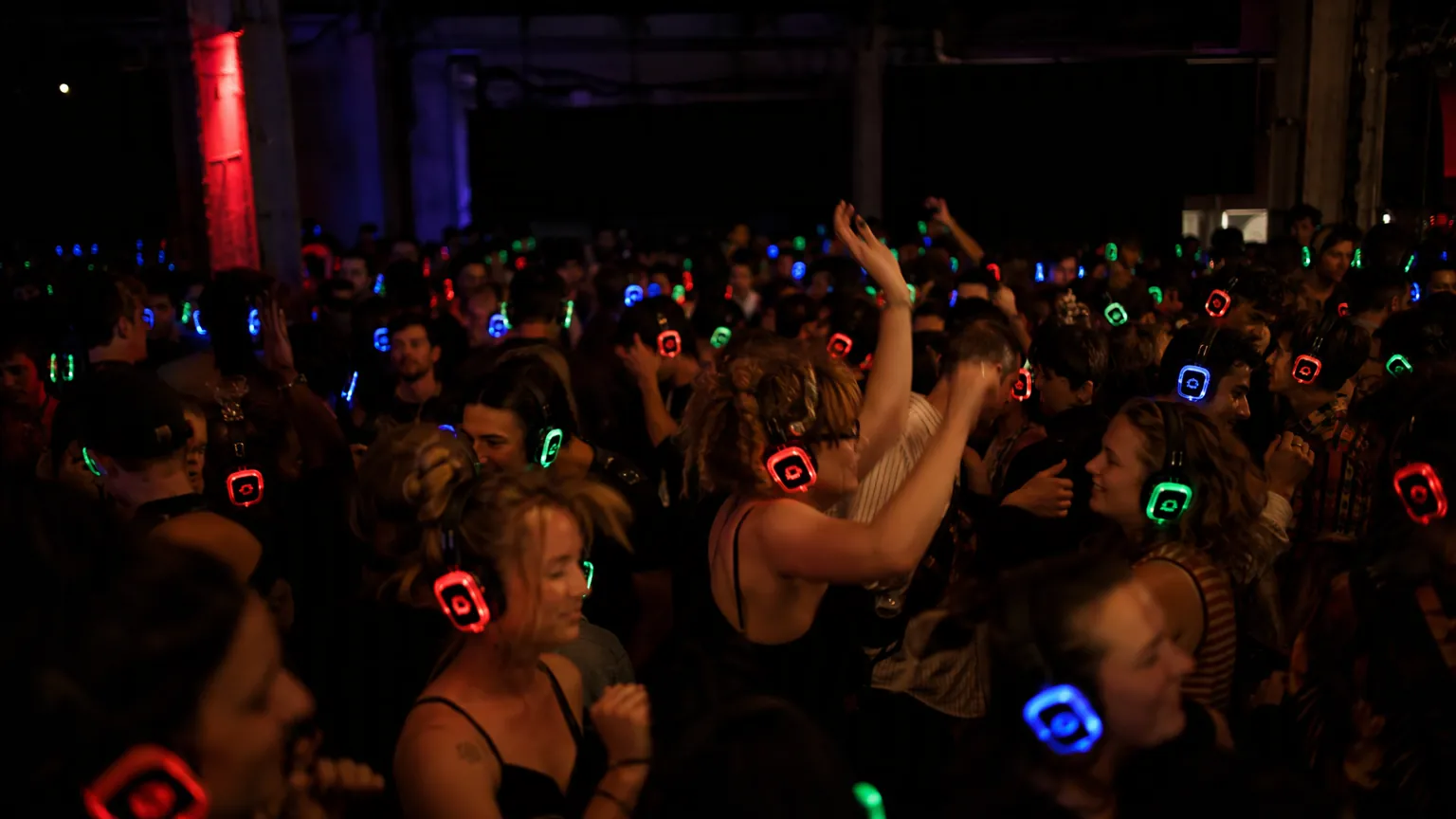
A silent disco replaces speakers with radio. Instead of pushing sound through the air, one or more transmitters broadcast the music on UHF radio frequencies, and every guest hears it through a wireless headset with its own volume control and channel selector. the details decide if your event feels like magic or a logistics hangover.
- RF broadcast, not Bluetooth. One transmitter serves unlimited headphones.
- Standard systems run 3 channels; conference grade systems go to 10–30.
- Rent at roughly $6–10 per headphone per day, plus transmitters, shipping and a deposit.
- The hidden costs are staffing, sanitising and lost unit fees. Budget for them.
- Killer use case: anywhere with a noise curfew.
01 / The techWhy RF and not Bluetooth
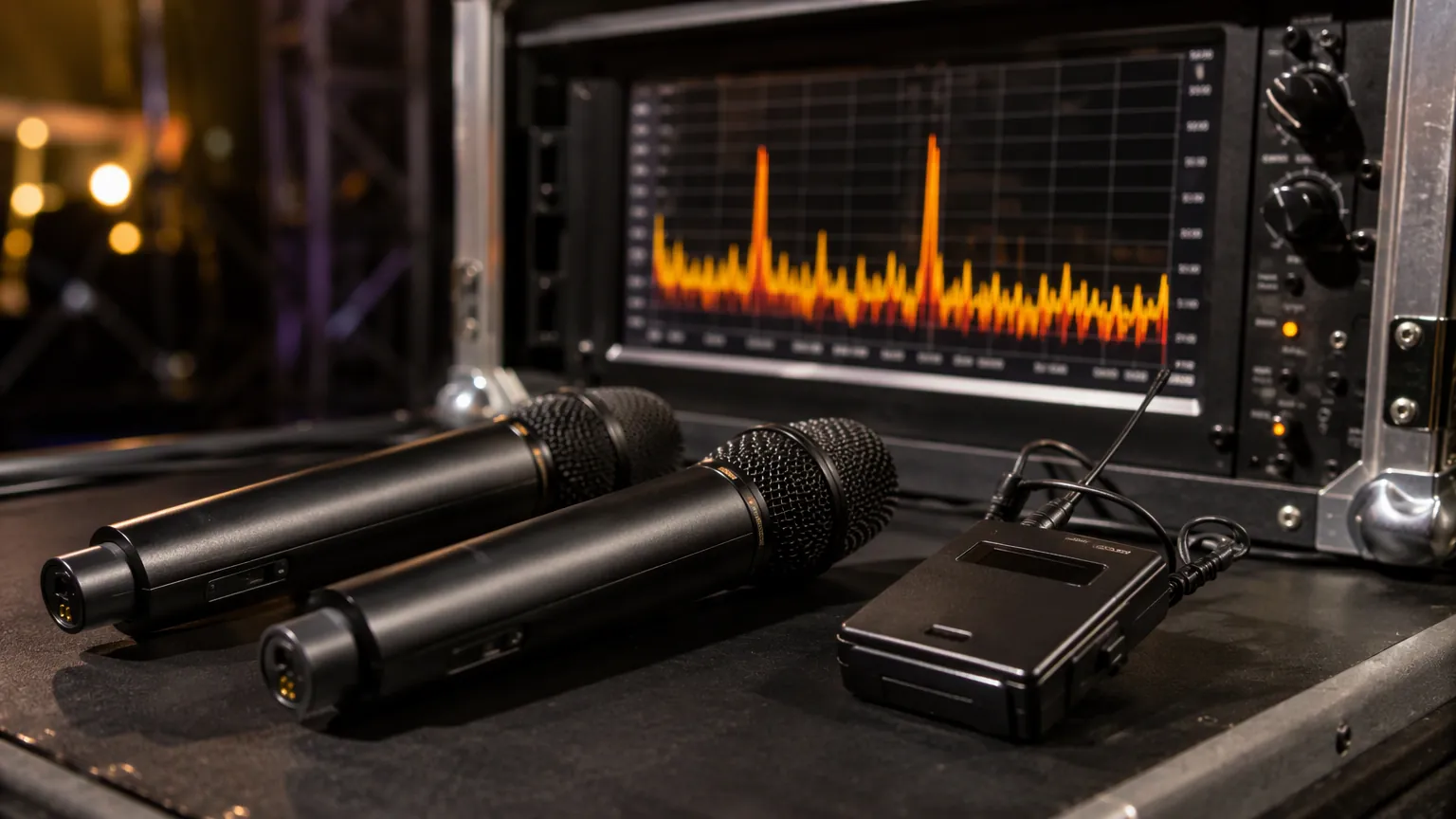
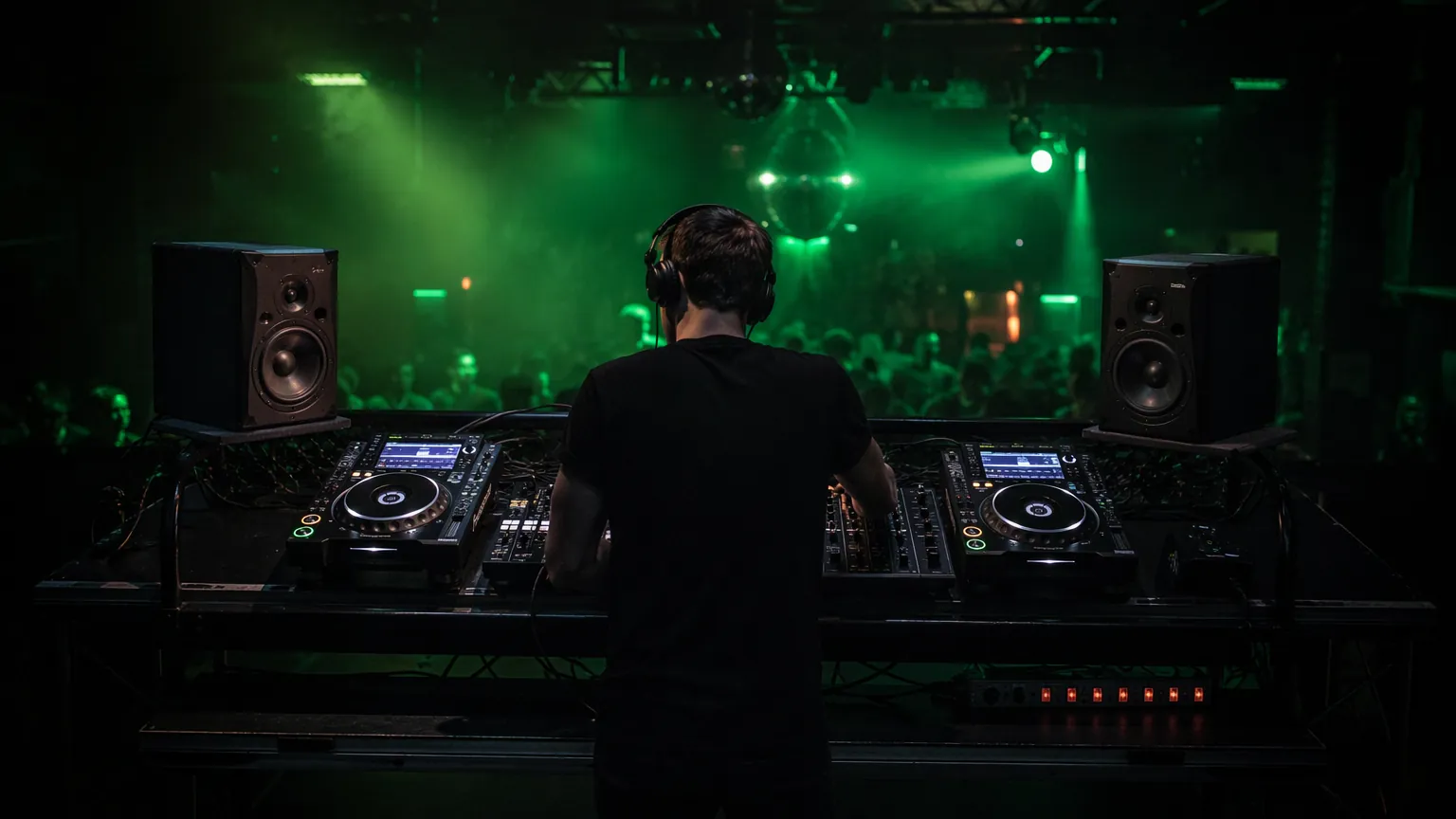
Bluetooth is a pairing technology: one source, a handful of receivers, negotiation between devices. It collapses somewhere past 8–10 connections. Silent disco systems use old school FM radio broadcast instead. The transmitter converts the audio feed from a DJ mixer, laptop or phone into an FM modulated signal on a license free UHF band, typically 863–865 MHz in Europe and around 914–915 MHz in North America, and radiates it to everyone in range.
Broadcast scales infinitely. Every headphone in the room receives all channels at once; pressing the channel button simply retunes the receiver, the same way a car radio changes station. No pairing, no app, no per device limit. Two hundred headphones listen as happily as two. Range runs to a few hundred metres in the open and less through walls: enough for most venues, with transmitters placed centrally at 2–2.5 m height.
02 / ChannelsThe multi channel trick
Standard party systems run three channels: one transmitter each, mapped to red, green and blue LEDs on the headphones. Three DJs battle for the floor, and the room's colour balance tells you in real time who's winning. It's the single most entertaining feedback loop in live events.
Conferences use the same hardware differently: keynote on channel one, breakout on channel two, translation on channel three. Professional "silent session" systems extend to 10–30 channels at a meaningfully higher price per unit. One warning from the field: transmitters and headphones are often locked ecosystems: brand A's transmitter won't necessarily talk to brand B's headsets. Rent or buy as matched kits.
03 / The moneyWhat it costs in 2026
Rental is priced per headphone per day, and published rates from US and UK providers cluster around $6–10 per headphone, with transmitters included in packages or around $50 each. Day two is often discounted. Buying entry level kits runs $40–80 per headphone plus ~$140 per transmitter. A 100-headphone, 5-transmitter purchase lands near $4,700 before you own the charging, storage and sanitising routine forever.
| Line item | Low | High | Notes |
|---|---|---|---|
| 100 headphones @ $6–10 | $600 | $1,000 | Per day; day 2 often ~50% |
| 3 transmitters | $0 | $150 | Often bundled in packages |
| Shipping, both ways | $50 | $100 | Waived for local pickup |
| Refundable deposit | $250 | $500 | Card hold, returned after check in |
| Distribution desk staff | $0 | $300 | DIY or one staffer for 4–5 h |
| Realistic total | ~$900 | ~$2,000 | Before lost unit fees |
The line items that aren't on the rate card
- Loss and damage. Replacement fees run $30–120 per headphone and $140–275 per transmitter. At a boozy party, assume 2–5% attrition and take IDs or a card hold at handout.
- The desk. Someone has to hand out 100 headsets, explain the channel button 100 times, and collect them at 1am. That's a staffed position, not an afterthought.
- Charging and sanitising. Multiday events need overnight charging rotation and wipe downs between users.
- Queue time. A slow desk means the first 20 minutes of your party happen in a line.
04 / When to use itWhere silent disco wins
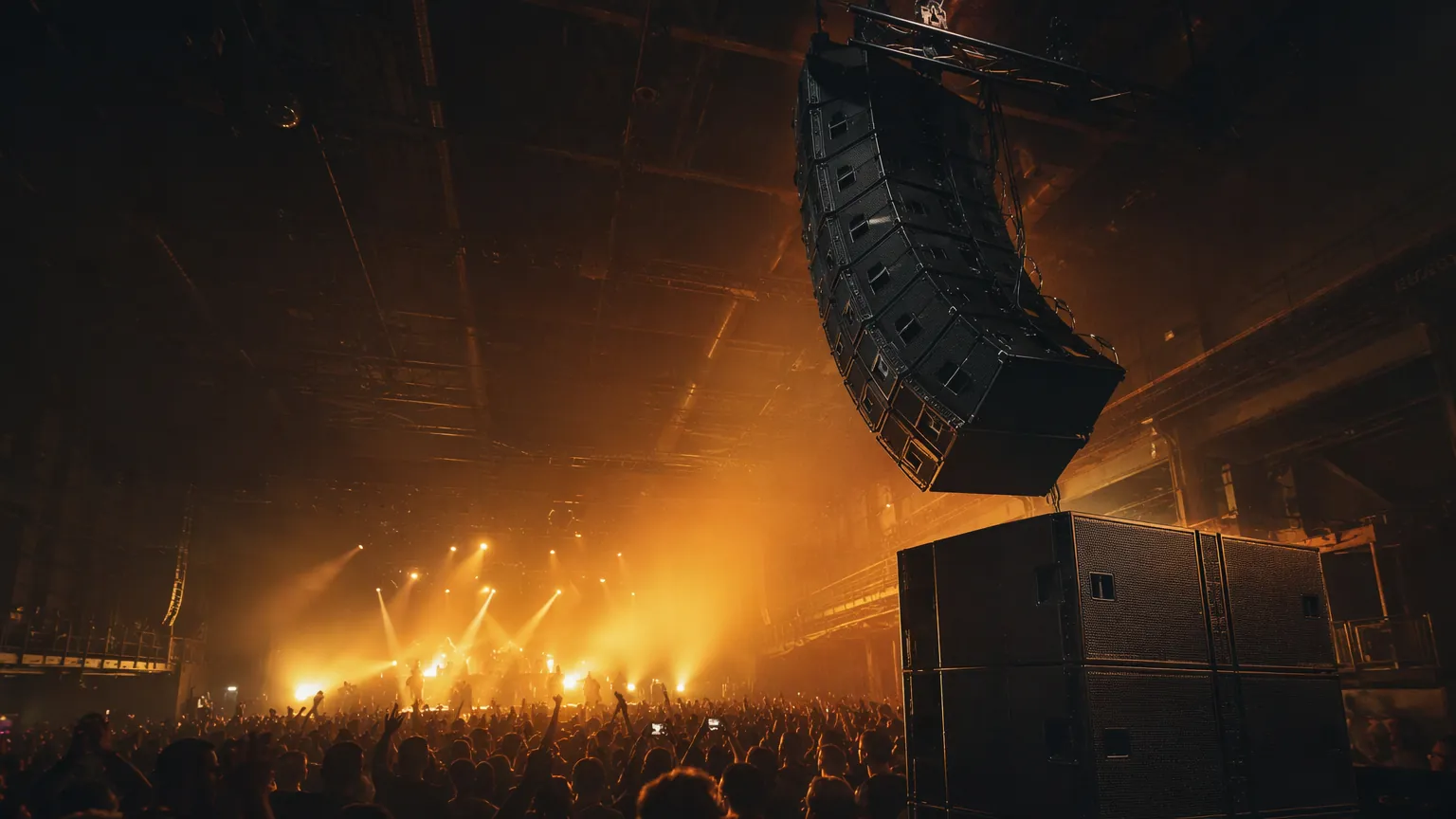
The format's superpower is noise law arbitrage. Rooftops, beaches, hotel gardens, museums, anywhere a 10pm curfew or a noise sensitive neighbour kills a conventional PA. The party continues at full energy while a decibel meter reads conversation level. Outdoor cinema, fitness classes, multi stage festivals and bilingual conferences all run on the same trick. As event AV providers point out, the business events market ("silent theater") now rivals the party market.
The best silent disco is the one where the neighbours never find out there was a party.
Where it loses: small budgets under 30 guests (fixed costs dominate), audiences who want to talk (headphones isolate), and anywhere you'd rather invest in one great sound system. For that, see our article on sizing a PA per guest count.
FAQSilent disco questions
How many channels do I need?
Three is the sweet spot for parties: enough variety for a channel battle, few enough that guests flip between them. Only conferences with simultaneous sessions need more.
Do silent disco headphones need Wi-Fi or internet?
No. They are FM radio receivers on license free UHF bands. No network, no app, no pairing, which is exactly why the format works in fields, beaches and basements.
Can I mix my own headphones with a rental system?
No, consumer Bluetooth headphones can't tune to UHF broadcast frequencies, and rental systems are locked to their own headsets. If you want guests to use their own earbuds, that's a different, app based product category entirely.
How much do silent disco headsets cost to buy?
Entry kits cost about $40 to $80 per headphone, plus roughly $140 per transmitter. Buying makes sense only if you run events often, because you take on charging, storage and cleaning as well.