Guest count sets the scale of a PA, but the programme sets its character. Fifty guests at a gala dinner need speech clarity at conversation level; fifty guests at a techno afterparty need a system with ten times the output. Any honest sizing method starts by separating the two questions: how loud, and for whom.
- Speech / background: ~2–5 W per person.
- DJ / dance floor: ~5–10 W per person, plus subwoofers.
- Live band: ~10 W per person and up.
- Outdoors: multiply by 2–3. No walls means no free reinforcement.
- Sensitivity and coverage beat raw wattage every time.
01 / The chartThe sizing chart
These are planning numbers for typical active (powered) speakers in typical rooms: starting points for a quote conversation, not engineering limits. "Dance" assumes electronic music or a party DJ with real low end.
| Guests | Speech / dinner | Party / DJ | Live band | Subs needed? |
|---|---|---|---|---|
| Up to 50 | 1 × 10–12" top (or column PA) | 2 × 12" tops | 2 × 12" tops | Optional (music dependent) |
| 50–150 | 2 × 12" tops | 2 × 12–15" tops + 1–2 subs | 2 × 15" tops + 1–2 subs | Yes: 1 × 18" per ~100 guests |
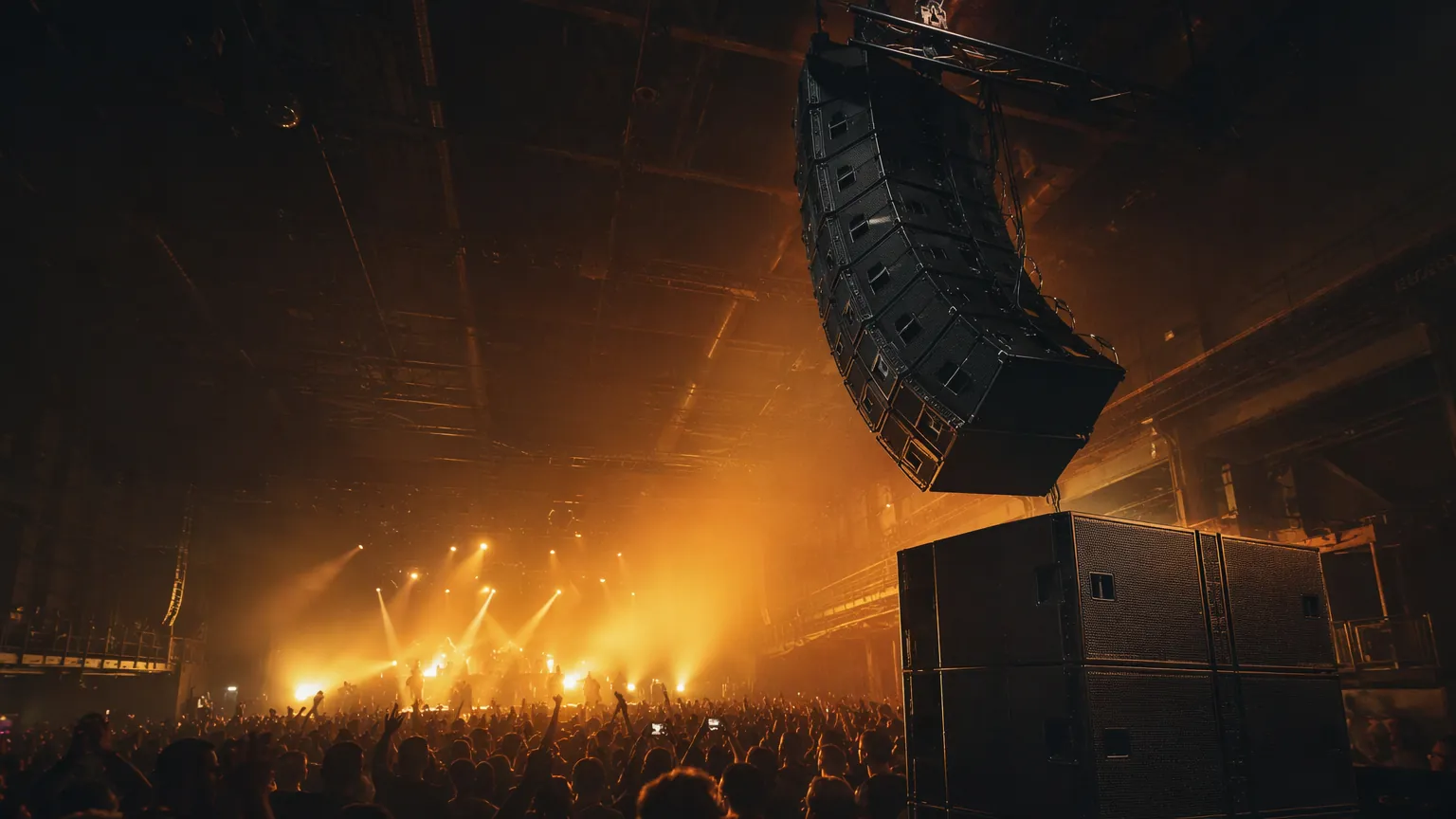
| 150–300 | 2 × 12" tops + delays | 2–4 tops + 2–4 subs | Small line array or stacked point source + 4 subs | Yes: 2–4 × 18" |
| 300–500 | Distributed system, many zones | 4+ tops, delay fills, 4–6 subs | Line array, front fills, 6+ subs | Yes: 4–6 × 18" or 2 × 21" |
| 500+ | You need a system engineer, not a blog post: hire one, honestly | |||
02 / Why watts lieSensitivity: the spec that predicts loudness
Watts measure input, not output. A speaker's sensitivity rating: how many decibels it produces at 1 watt, measured at 1 metre: decides how efficiently watts become sound. A 98 dB sensitivity box with 500 W can outrun a 92 dB box with 1,000 W, because every 3 dB of sensitivity is worth a doubling of amplifier power. When comparing systems, compare maximum SPL figures, not wattage badges. Manufacturers like Shure publish educational material on exactly this math.
The second half of the lie is coverage. One enormous pair of speakers at the stage will cook the front rows to 105 dB while the back of the room hears mush at 80. Two smaller pairs, mains plus delayed fills halfway down the room, deliver even 90-something decibels everywhere. Uniform 92 dB beats 105 dB at the front and 80 at the bar.
03 / Low endSubwoofers: when the kick drum counts
Tops alone reproduce kick drums politely. For anything dance oriented, subs do the physical work guests feel in their chest. The working ratios: roughly one 18-inch sub per 100 dancing guests indoors, doubled outdoors or for bass heavy genres. Centrally clustered subs couple together and buy you a few free decibels; subs spread under satellite speakers even out coverage at the cost of that coupling gain.
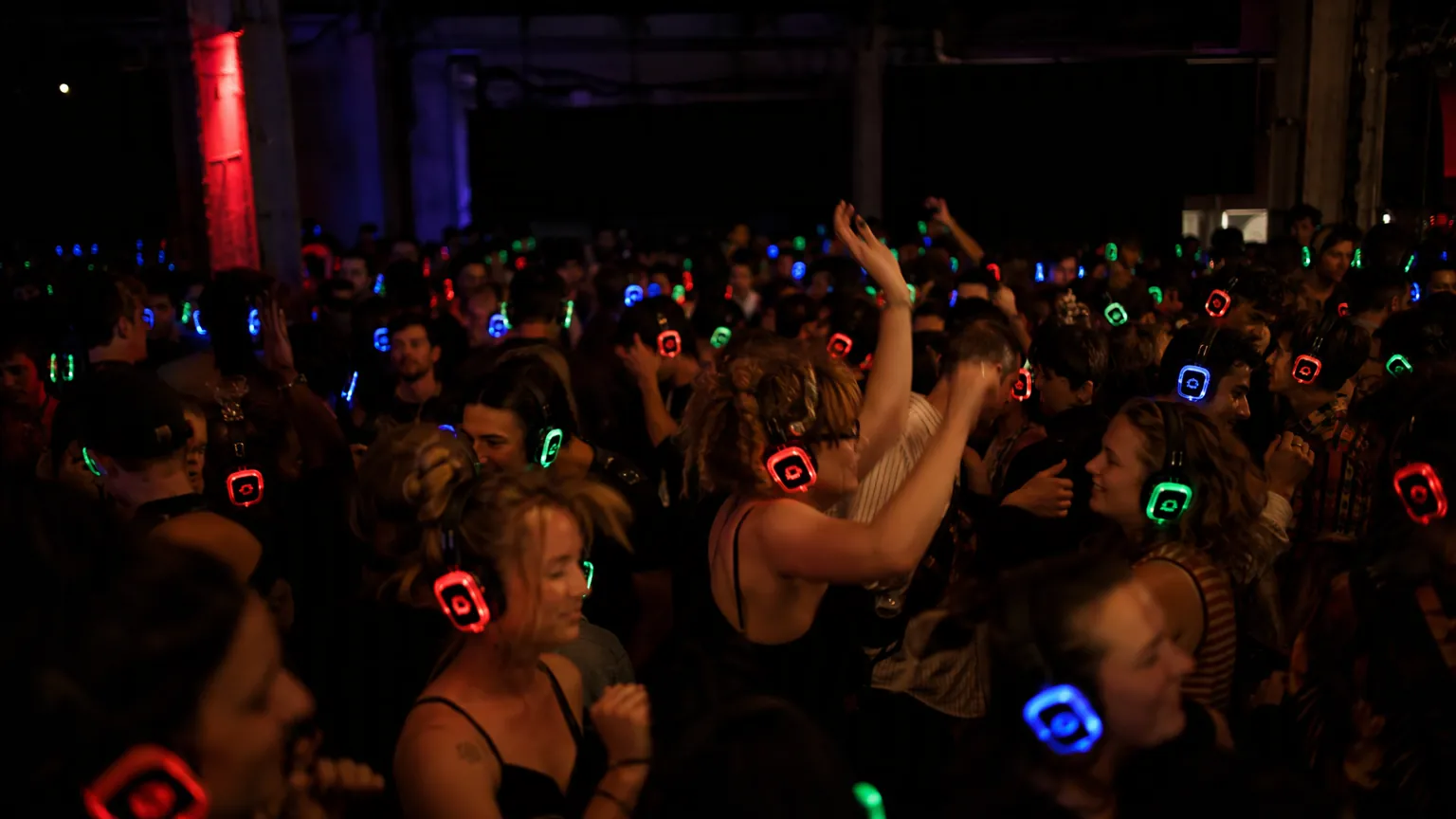
And respect the neighbours: low frequencies ignore walls. If the venue has a curfew or a hotel above it, the sub count is a conversation with the venue manager before it's a conversation with the DJ. (If the law is truly against you, a silent disco is the legal cheat code.)
04 / EnvironmentIndoor vs outdoor: the cruel multiplier
Indoors, walls and ceilings reflect sound back into the room: free reinforcement you stop noticing until it's gone. Outdoors, sound radiates away and dies. The same party needs two to three times the system outside, plus weather rated or covered gear, wind tolerant mic technique, and much more careful sub placement (outdoor bass travels for kilometres at night when the air cools).
Beach and garden events fight ambient noise, waves, generators, traffic, so the target SPL has to clear a higher floor. mind hearing safety norms: occupational rules like the US OSHA noise standard (85 dBA over 8 hours) are written for workers, but they're a sane compass for how long guests should stand in front of a loud stack.
05 / Sanity checksFive questions before you sign the quote
- What's the loudest 30 minutes of the event? Size for that, not the dinner.
- Is the room longer than ~20 m? If yes, ask for delay fills.
- Is there a curfew, a hotel above, or neighbours within earshot?
- Indoor or outdoor, and if outdoor, is the quote already multiplied?
- Who's operating? A system without an engineer is a gamble at 300+ guests.
Nobody complains that the sound was too clear. They complain it was too loud at the front and inaudible at the back. A coverage failure, not a wattage failure.
FAQPA sizing questions
Is a single portable party speaker enough for 50 guests?
For background music at a 50-guest gathering, yes. A large battery speaker covers it. The same speaker at a 50-guest dance party will distort, run out of low end, and leave the room's edges silent. Programme type, not guest count, makes that call.
Do I need subs for a wedding?
If there's a DJ or dancing planned after dinner: yes. Dinner and speeches run fine on tops alone, but the dance floor portion of the night is exactly what subs exist for. One 18" sub per hundred dancing guests is the working rule.
Why is outdoor sound so much more expensive?
Two to three times the speaker power, weather protection, wind rated stands and covers, more cable runs, often a generator with clean power, and bass control to keep the peace with neighbours. The hardware is only part of it.
Is 200W loud for a speaker?
It depends on the speaker's sensitivity, not the watts alone. A 200 W speaker rated at 95 dB sensitivity is loud enough for speech and background music for around 50 people. It is not enough for dancing, where you want more speakers and a subwoofer.